
WELCOME TO THIS CONCERT OF GREAT OPERA CHORUSES!
Presented in partnership with 
Scroll down this page to access information.
1- About this evening
2- Program
3- Biographies and lists
4- Contextualisation of the choruses
5- Credits
________________________________________________
One Breath, a Thousand Destinies: Great Opera Choruses
In the world of opera, the spotlight often shines intensely on the soloists and their tragic fates. Yet, the true pulse of a dramatic work, its most earth-shattering breath, frequently lies elsewhere: in the raw, visceral force of the crowd.
On May 8, 2026, within the exceptional acoustics of the Maison Symphonique , the Chœur Classique de Montréal invites you to a monumental celebration where the chorus rightfully takes center stage.
Through a hand-picked selection of the greatest masterpieces in operatic history, we offer a journey into the heart of human emotion at its absolute peak. Far from being a mere backdrop, the chorus is the mirror of our own passions. It comments, judges, mourns, and triumphs.
During this masterful evening, you will hear the poignant lament of Israelites mourning the loss of their homeland in the famous Va, pensiero from Nabucco. You will feel the exhilarating energy of gypsies hammering their anvils in praise of the new day in Il trovatore , and you will be moved by the mystic fervor of the pilgrims in Tannhäuser. Whether it is the sheer popular jubilation of the toreadors’ march in Carmen or the profound solemnity of Mozart’s prayers, each piece is a world unto itself.
These iconic pages penned by Verdi, Wagner, Bizet, Rossini, and Mozart will take on their full, breathtaking dimension. Prepare to be physically enveloped by a majestic wave of sound: the resonance of a hundred voices united in a single, vibrant chord.
This event is an open invitation to everyone. Whether you are a seasoned music lover or discovering classical music for the very first time, let yourself be swept away by this profoundly human and collective experience.
________________________________________________
PROGRAM
FIRST PART
Gioacchino ROSSINI – William Tell – Overture
Giuseppe Verdi – Il Trovatore – « Anvil chorus »
Pietro Mascagni – Cavalleria rusticana – « Regina Cœli » – Catherine St-Arnaud, soprano – Stéphanie Pothier, mezzo-soprano
Richard Wagner – Tannhäuser – « Pilgrims’ chorus »
Giuseppe Verdi – Nabucco – « Chorus of the Hebrew slaves »
Richard Wagner – Lohengrin – « Bridal chorus »
Wolfgang Amadeus Mozart – Die Zauberflöte – « O Isis und Osiris »
Alexander Porfyrevitch Borodine – Prince Igor – « Polovtsian dances » – Pierre Rancourt, bass
INTERMISSION
SECOND PART
Jean-Baptiste Lully – Le bourgeois gentilhomme – « Turks ceremony »
Georges Bizet – Carmen – « March of the toreadors »
Georges Bizet – Carmen – « Habanera » – Stéphanie Pothier, mezzo-soprano
Charles Gounod – Faust – « Soldiers’ chorus »
Henry Purcell – Dido and Aeneas – « Dido’s lament and final chorus » – Stéphanie Pothier, mezzo-soprano
Carl-Maria von Weber – Der Freischütz – « Huntsmen’s chorus »
Giuseppe Verdi – La Traviata – « Brindisi » – Catherine St-Arnaud, soprano – Joseph Visseaux, tenor
Giuseppe Verdi – Aïda – « Triumphal scene »
Conductor: Louis Lavigueur. C.Q.
________________________________________________
BIOGRAPHIES – click on the names in blue to access the artists’ pages.
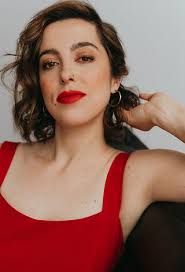 Catherine St-Arnaud, soprano
A soprano with a sparkling stage presence and a velvety tone, Catherine St-Arnaud is an opera singer described as “simply dazzling” (Revue L’Opéra) who has made a name for herself both in Canada and internationally. A “performer of the highest calibre” (Opera Canada), she is acclaimed for her “rich and luminous” voice (Le Soleil). Recently, she made her debut in Asia (as Adina in L’elisir d’amore at the National Kaohsiung Arts Centre in Taiwan) as well as in the United States (as a soloist in Carmina Burana with the Oregon Symphony) and with the Canadian Opera Company (as Amore in Robert Carsen’s Orfeo ed Euridice), as well as creating the role of Albertine at the age of 30 in Albertine en cinq temps – l’opéra. She has also sung the roles of Adèle (Die Fledermaus, Strauss) and Adina at the Opéra de Québec, Frasquita (Carmen, Bizet) with the Philharmonic Orchestra and Chœur des mélomanes and at the Festival Classica, as well as appearing in numerous concerts with various ensembles across Canada.
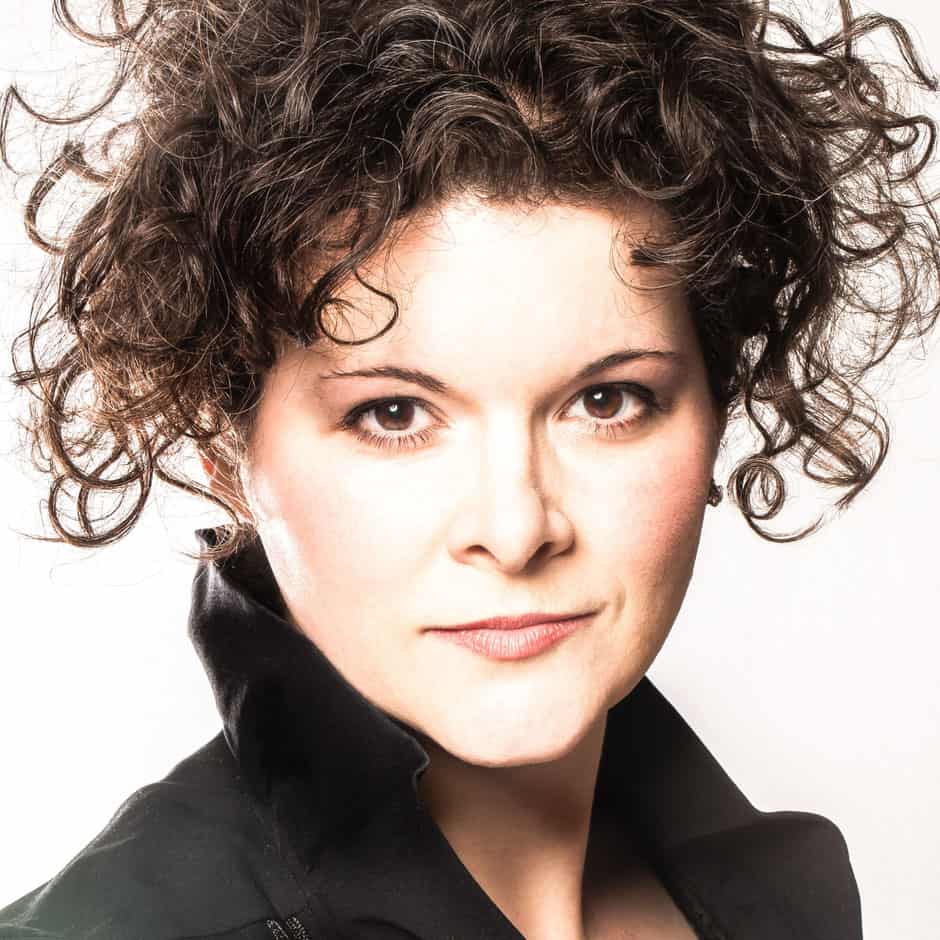 Stéphanie Pothier, mezzo-soprano
A mezzo-soprano with a timbre that is both dark and radiant, Stéphanie Pothier performs a wide-ranging operatic repertoire, spanning Baroque music vocalises to contemporary works and Romantic pieces. Stéphanie Pothier combines singing with theatrical flair to bring music to life in both concert and opera settings. She is a guest soloist with numerous ensembles and companies: Opéra de Montréal and Opéra de Québec, Orchestre Métropolitain, Orchestre symphonique de Montréal, Chants Libres, I Musici, Festival de Lanaudière, Clavecin en concert, Grands Ballets Canadiens… She performs under the baton of renowned conductors, including Yannick Nézet-Séguin, Lorraine Vaillancourt and Kent Nagano.
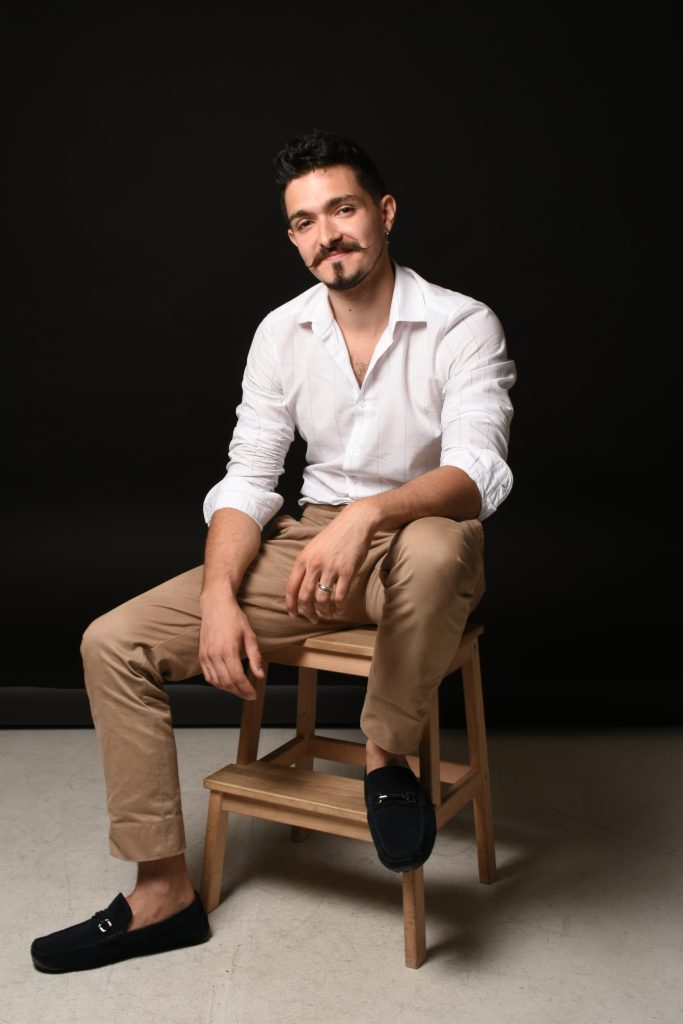 Joseph Visseaux, tenor
Joseph Visseaux is a musician with a unique background, combining a career as a professional percussionist with a burgeoning singing career. Holder of a PhD in performance from the University of Montreal, he is active on the Quebec scene through a variety of projects, ranging from contemporary music to jazz and the operatic repertoire. This dual approach to performance fosters a cross-disciplinary artistic vision, where a sense of rhythm, listening and timbre extends into his vocal work. Recently admitted to the Conservatoire de musique de Montréal to pursue a postgraduate diploma in classical singing, he stands out for his clear tenor voice, great musicality and remarkable adaptability. His unconventional career path reflects a committed and constantly evolving artistic quest.
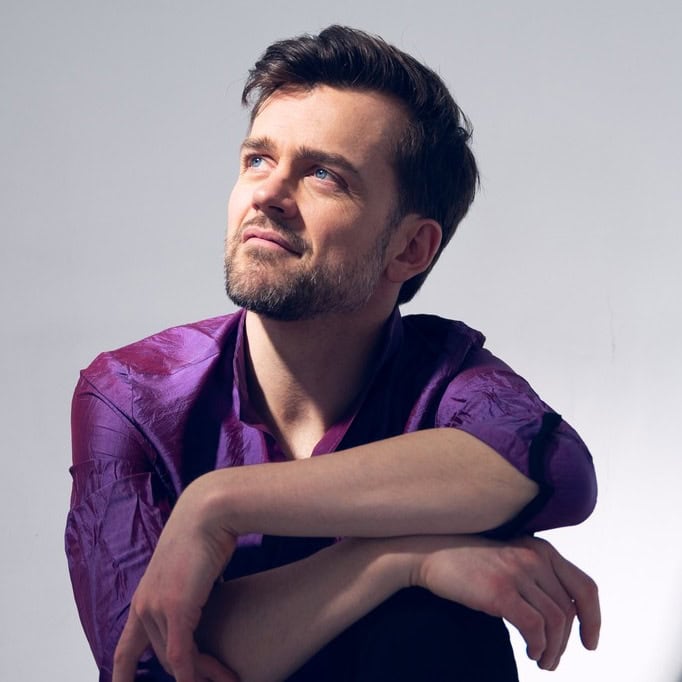 Pierre Rancourt, baritone
A singer, guitarist, producer and creative force, Pierre Rancourt has enjoyed a varied and unconventional career spanning twenty years, ranging from opera and recital stages to music education workshops, musical theatre and recording, all within a joyful blend of musical styles. A regular collaborator with the Opéra de Montréal, he draws on his talents as a performer, coupled with solid practical experience in social action through the arts. He is a visiting lecturer in cultural mediation at the Faculty of Music of the Université de Montréal. He is also co-founder and executive and artistic director of the organisation Le Volier, which uses music to foster intercultural dialogue.
 Louis Lavigueur, C.Q., conductor and artistic director
A top graduate of Laval University and recipient of the Gloire de l’Escolle medal, Louis Lavigueur C.Q. has been conducting the Chœur classique de Montréal since autumn 2008, including a tour of Russia in 2019. Since 1986, Louis Lavigueur has been Artistic Director and Conductor of the Montreal Youth Symphony Orchestra, with which he has recorded several albums and toured in Quebec, Canada, Greece, France, Belgium, Germany, China and the United States. He is also Artistic Director and Conductor of the Sinfonia de Montréal, which he founded in 2001. He is choirmaster of the Chœur polyphonique de Montréal, the resident choir at Marie-Reine-du-Monde Cathedral. Louis Lavigueur also conducted the Ensemble vocal Polymnie de Longueuil for many years. Each year, he conducts several symphonic concerts in addition to those of his vocal ensembles.
 Geneviève Jalbert, organist
Highly active on the Quebec music scene, Geneviève Jalbert pursues a dual career as a performer and teacher. As a pianist, she stands out for her refined, sensitive and versatile playing. She performs regularly in concert with soloists and ensembles. With over 15 years’ experience as an accompanist and vocal coach, including at McGill University and Marianopolis College, she is currently an accompanist at the École de musique Vincent-d’Indy and for the Chœur classique de Montréal.
Grand Orgue Pierre-Béique
The organ at Maison symphonique de Montréal, inaugurated on May 28 2014, was designed and built on behalf of the OSM by the organ builder Casavant with the collaboration of architects Diamond Schmitt+ AEdifica for its visual design, and is the orchestra’s property.This is a large organ intended for orchestral use, and is recorded in the book of the Saint-Hyacinthe builder as Opus 3,900. It consists of 109 registers, 83 stops, 116 ranks and 6,489 pipes. The instrument bears the name Grand Orgue Pierre-Béique, in tribute to the OSM founder and first general manager (from 1939 to 1970). An astute administrator and a committed music lover, Pierre Béique took over from Dame Antonia Nantel, wife of Mr. Athanase David, who had acted, since 1934, as secretary of the Board of Directors of the Société des Concerts symphoniques de Montréal, the forerunner of the OSM. Purchase of this organ was made possible, courtesy of Mrs. Jacqueline Desmarais, who assumed the total cost and, in so doing, wished to keep alive the memory of the lasting contribution made by Pierre Béique to the OSM’s mission of excellence.
 Access the Chœur classique de Montréal biography.
Sopranos 1: Louise Bellisle, Lucie Blain, Michelle Champagne, Lucie de Chantal, Édith Des Lauriers, Hana Dock, Denise Galarneau, Marie-Andrée Guinard, Danielle Leblanc, Marta Rzepkowska, Marguerite Senay, Léa Shannon // Sopranos 2 : Evgenia Bakulina, Vera Berenbaum,, Élisabeth Di Lalla Besner, Michelle Dionne, Sophie Gervais, Heather Higgins, Camille Léal Longuemeaux, Véronique Le Hénaff, Marie LeFrançois, Myrna Naman, Marie-Claude Prévost, , Ginette Simard, France St-Pierre. // Altos : Claude-May Ambroise, Kristine Berey, Renée Bergeron, Aline Blain, Christiane Delisle, Nicole Delisle, Francine Drouin, Carine Flot, Andrée Gauthier, Jocelyne Gauthier, Édith Grégoire, Marjolaine Lalonde, Rose-Marie Lèbe, Francine Lévesque, Lucie Perras, Felice Schaefli, Josée Veillette. // Tenors : Jean-Sébastien Allaire*, Jean Arnold, Antonie Beaudet, André Bellerive, Jean-Paul Berger, Jean Lapointe, David Menzies*, Jean-Frédéric Olivier, Gilles St-Louis, Ricardo Urbina. // Basses : Pierre-Étienne Bergeron*, Émile Bonetti, Claude Grenier*, François-Nicolas Guertin, Thomas Pennaforte, Uli Locher, Albert Schenk, Neal Sondheimer, Robert Tessier, Alexandre Villemaire.
* Member of Union des artists
 Montreal Youth Symphony Orchestra
The Montreal Youth Symphony Orchestra (OSJM) is celebrating its 50th season this year, the 40th of which has been under the musical direction of Louis Lavigueur. Founded in 1976, the OSJM has helped train nearly 2,500 musicians. Many of these young talents are now professional musicians in Canada and internationally. Since its foundation, the OSJM has given over 400 concerts, premiered around ten works by Quebec composers, recorded more than 50 albums and showcased the talent of its young members across the globe. In the summer of 2026, the OSJM will present five concerts in Austria, Slovenia and Croatia. Each season, the OSJM presents three regular concerts, in addition to several special concerts organised in collaboration with guest choirs and soloists. Through the high standard and quality of all its concerts, the OSJM continues to demonstrate its relevance within the Montreal and international music scenes.
First violins : Esmée Sparling, Gabrielle Marois, Louis Duffayet, Hezha Azizi Khosh-Sirat, Wang-Lyne Tchotanin, Sophie Dumas, Cécilia Kim, Zofia Yang, Émilien Tardy, Marco De Orduna, Arielle Frappier-Cavaluzi, Soline Boudreau // Second violins : Emma Tomiuk. Ludovic Rivet, Vivianna Mahammed, Nicholas Rambally, Cassiopée Blanchot-Bassignot, Marina Desjardins, Ramona Ahrenskeaff, Camila De Orduna-Ortiz, Lambert Gauthier, Florence Pelletier, Simon Dumas, Ronan Chen, Isabella MacLellan // Altos : Dannick Bujold-Senss, Simon Finnerty, Seohee Ryou, Lucas Ryou, Léandre Gaucher, Marianne Osterrath // Cellos : Michael Fowler, Emmanuel Marquis-Pelletier, Lisa Hoang, Joachim Djossou, Feyderik Myrand, Léon Cyr, Mathis Lafleur, Tristan Blair, Juliette Morin, Thomas Lepage, Léa Poirier-Asselin, Simone Lepitre // Double basses : Mathis Boutilier, Romy Desrosiers, Maya Marquez, Massis Boudreau // Flutes : Anne-Sophie Ernst-Tabaka, Simon Julien, Frédéric Beaudoin // Oboes : Eva Favreau, Yingsi He // Clarinets : Émile Lemay-Gervais, Robin Stinat-Vincent // Bassons : Justus Kuehn, Daomée Burr-Véziau // Horns : Wanning Ye, Mélissa Provost-Ross, Sacha Lessard, François Magné, Juliette Fortier // Trumpets : Éloi Bergeron, Maxcy Bagland // Off stage trumpet : Damien Pinet* // Trombones : Yosra Zaazaa, Éloïse Lepage // Trombone basse : Éli Turmel // Percussions : Adrien Faucher-Thibault, Niko Brunet, Xavier Quinlan, David Weirthemer // Harp : Elena Anger* // Managers : Florence Pelletier, Daomée Burr-Véziau // CEO : Anne-Marie Desbiens.
*Supernumerary
________________________________________________
CONTEXTUALISATION OF THE CHORUSES
Giuseppe Verdi (1813 – 1901) – Il Trovatore ◇ « Anvil chorus » – Rome, Teatro Apollo, January 19 1853
The action is set in 15th-century Spain and features a rather complex plot. The second act begins with the Slaves’ chorus or Anvil chorus: the Gypsies are tinsmiths who sing whilst hammering on their anvils to celebrate the breaking dawn and the pleasures of life: work, wine and women.
Pietro Mascagni (1863 – 1945) – Cavalleria rusticana ◇ « Regina Cœli »– Rome, Teatro Costanzi, May 17 1890
This opera depicts the reality of peasant life at the time. The libretto is based on a novel by Giovanni Verga. The action takes place in a Sicilian village in 1890 and centres on love, betrayal and death. The Regina Cœli is sung by the congregation inside the church, with the crowd gathered on the forecourt joining in.
Richard Wagner (1813 – 1883) Tannhäuser ◇ « Pilgrims’ chorus » – Dresden, Königliches Hoftheater, October 19 1845
In this Romantic opera, the poet-singer Tannhäuser, torn between pure love and the carnal pleasures of the goddess Venus, sets off on a pilgrimage to Rome to implore divine forgiveness. This sublime and solemn chorus, building to a crescendo, heralds the long-awaited return of the repentant travellers.
Giuseppe Verdi (1813 – 1901) – Nabucco ◇ Chorus of the Hebrew slaves – Milan, Teatro alla Scala, March 9 1842
Verdi wrote in 1879 that, when he set about reading the libretto for *Nabucco* that had been given to him (after Otto Nicolai had turned it down), it opened at the page containing the poem ‘Va, pensiero’. At Verdi’s funeral, the aria was spontaneously sung in chorus by the crowd. Soon afterwards, it came to be regarded as a political statement and even became the anthem of Italian patriotism during the Austrian occupation. The Chorus of the Hebrews, inspired by Psalm 137, recounts the biblical story of the Hebrews’ exile to Babylon in 586 BC. It is the song of the Israelites mourning the loss of their homeland.
Richard Wagner (1813 – 1883) – Lohengrin ◇ « Bridal chorus » – Weimar, Großherzogliches Hoftheater, August 28 1850, conductor : Franz Liszt
Set in Antwerp at the beginning of the 10th century, the opera tells the story of how Elsa marries a mysterious knight who demands that she never ask him his true name or where he comes from. The wedding ceremonies begin in the third act. After the famous prelude, the curtain rises on an empty bridal chamber. Elsa and Lohengrin are escorted into the room to the sound of this chorus. Their procession withdraws during the final bars. Elsa subsequently learns that her husband is Lohengrin, the son of Parsifal, and that the swan pulling his ship is Elsa’s murdered brother, Gottfried, brought back to life by Lohengrin.
Wolfgang Amadeus Mozart (1756 – 1791) – Die Zauberflöte ◇ « O Isis und Osiris » – Vienna, Theater auf der Wieden, September 30 1791
Mozart’s final masterpiece, this opera is a true coming-of-age tale. The high priest Sarastro and his initiates solemnly invoke the Egyptian gods Isis and Osiris to protect Prince Tamino and his companion Papageno, who are ready to face the formidable trials of wisdom.
Alexander Borodin (1833 – 1887) – Prince Igor ◇ » Polovtsian dances » – Saint-Petersburg, Mariinsky Theater, November 4 1890
It took Borodin 18 years to compose his opera, Prince Igor, in his spare time. However, he left the work unfinished, and it was Rimsky-Korsakov and Glazunov who completed it. Borodin wrote and orchestrated the Polovtsian Dances. These are performed by the slave dancers of Prince Konchak, khan of the Polovtsians, to entertain the prisoner whom he respects and honours, Igor, Prince of Seversky. The action is set in 12th-century Russia, a period characterised by conflicts between the Russians and the Tatars.
Georges Bizet (1838 – 1875) – Carmen ◇ « Habanera and March of the toreadors » – Paris, Opéra-Comique, March 3 1875
Carmen is based on a short story by Prosper Mérimée. The action is set around 1820 in Seville and recounts the love affairs of Don José, a corporal in the Dragoons who is in love with Micaela. Having succumbed to the charms of the beautiful Carmen, he kills her when he learns that she prefers the bullfighter Escamillo to him. The girls’ exit from the cigarette factory where they work serves to introduce the character of Carmen in the Habanera, as she attempts to seduce Don José for the first time. The Habanera is inspired by an aria from El Arreglito, by the Spanish composer Iradier. The March of the toreadors introduces the bullfight scene at the end of the opera. The various figures in a bullfight include the alguazil, who leads the procession in a 16th-century bailiff’s costume; the chulos, who are the matador’s assistants; the banderillos, who plant ribbon-wrapped barbs into the bull’s neck, aided by picadors who strike it with lances; and finally the espada, responsible for delivering the fatal blow.
Charles Gounod (1818 – 1893) – Faust ◇ « Soldiers’ chorus » – Paris, Théâtre lyrique, March 19 1859
Inspired by Goethe’s literary masterpiece, this French opera depicts the dark pact struck between the elderly Faust and the devil. In the fourth act, this majestic chorus (“Immortal glory of our forefathers”) marks the triumphant return of the military troops, among whom is Valentin, the brother of the ill-fated Marguerite.
Henry Purcell (1659 – 1695) – Dido and Aeneas ◇ « Dido’s lament and final chorus » – London, Josias Priest boarding school, 1689
Although it was performed on that date by the school’s pupils, it is possible that the opera had been performed previously at the English court. After a 10-year siege, the Greeks finally managed to enter the city of Troy — using the famous wooden horse — and sacked the city. Aeneas, the Trojan prince, managed to escape thanks to Venus, who wished for him to go and found a new Italian city, Rome. During the voyage, his ship is driven off course by storms towards Carthage, where Dido, the widowed queen, falls victim to the wiles of the Enchantress and the Witches, who succeed in persuading Aeneas to leave despite his love for Dido. She is heartbroken. Urging the indecisive Aeneas to depart, Dido sings a poignant lament and dies.
Carl-Maria Von Weber (1786-1826) – Der Freischütz ◇ « Huntsmen’s chorus » – Berlin, Königliches Schauspielhaus, June 18 1821
A cornerstone of German Romantic opera, the plot unfolds in a Bohemian forest where a young hunter sells his soul in exchange for magic bullets. In the third act, this rousing chorus celebrates the spirit of camaraderie with great vigour.
Giuseppe Verdi (1813 – 1901) – La Traviata ◇ « Brindisi » – Venice, Teatro La Fenice, March 6 1853
The story is based on Alexandre Dumas’ *La dame aux camélias* (1848). The opera opens with a party at the home of Violetta, a courtesan with whom Alfredo is in love. Alfredo leads the *Brindisi*, inviting the guests to raise their glasses. The aria is then taken up by the guests and by Violetta.
Giuseppe Verdi (1813 – 1901) – Aïda ◇ « Triumphal scene » – Cairo, Khedival Opera House, December 24 1871
Set in Memphis and Thebes during the time of the pharaohs, the opera depicts the love story between an Ethiopian slave (Aïda) and an Egyptian officer (Radames), a relationship thwarted by the armed conflict between their respective peoples. A solemn march and numerous dances make up the scene of royal splendour that concludes the second act. The Egyptian people warmly welcome the arrival of their sovereign and the return of the Egyptian troops who have defeated the Ethiopian army.
_______________________________________________
CREDITS
Production committee : Sophie Gervais, Véronique Le Hénaff, Gilles St-Louis
Translation and editing: Jean Arnold, Albert Schenk, Michelle Dionne
Texts: Jean Arnold
Preparation of the lyrics for the projection: France St-Pierre, Michelle Dionne, Gilles St-Louis
Projection: Anne-Marie Desbiens
Graphic design: Duval design communication
Infography: Agence Ekla
Printing: Reprodoc
Press table: Lise Gaudette
Other contributions: Evgenia Bakulina, Jean-Paul Berger, Andrée Gauthier, Danielle Leblanc, Marguerite Senay, Josée Veillette, G. St-Louis, R. Urbina.
Board of directors: V. Le Hénaff – president, G. St-Louis – vice-president, S. Gervais – treasurer, J. Arnold – administrator, E. Bakulina – administrator, A. Gauthier – administrator, M.A. Guinard – administrator, U. Locher – administrator
